Is it really offline?
Yes. All analysis runs on your machine. The one time the app uses the network is when
you click Download to install recognition models (roughly 34 MB for the required set,
more for optional languages and the local language models). After that you can
disconnect entirely and everything still works.
Which languages does it read?
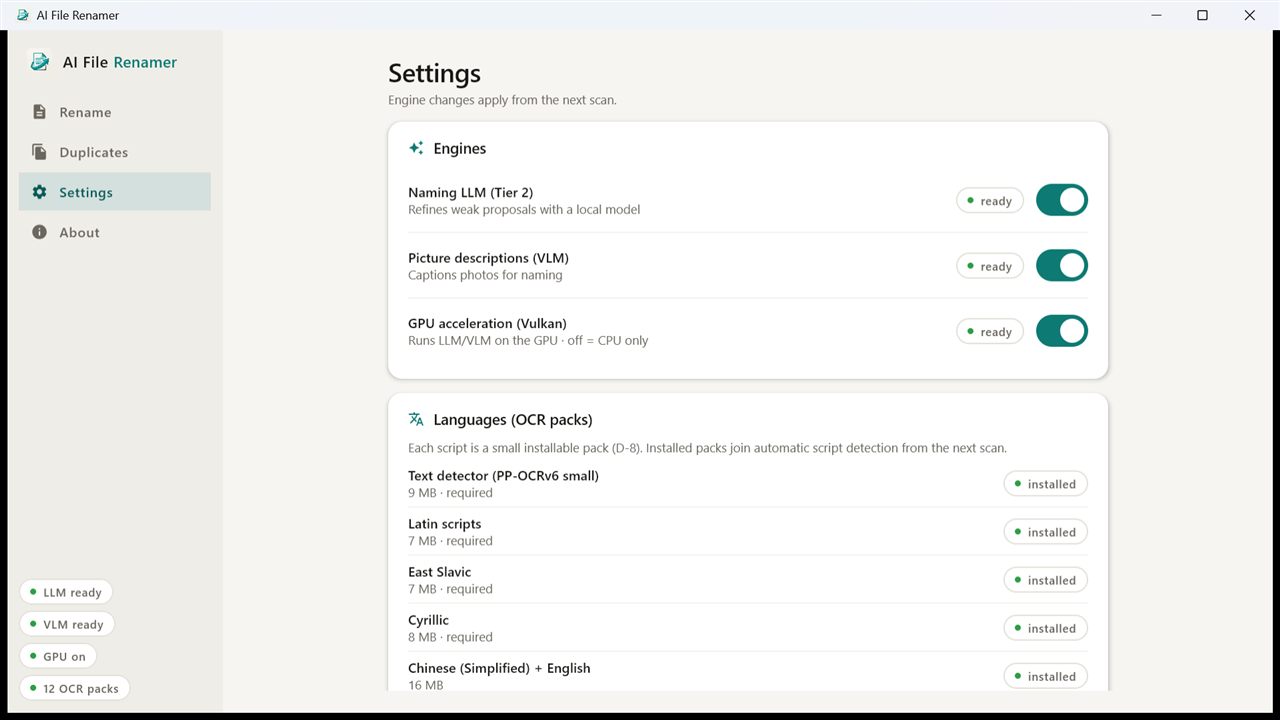
Recognition packs cover 20+ languages across Latin, Cyrillic, Greek, Arabic, Devanagari,
Chinese, Japanese, Korean, Thai, Tamil and Telugu scripts; you install only the ones you
scan. The script is detected automatically, and a page it cannot read is reported as
unrecognized rather than named from garbage. Hebrew is not supported today — no suitable
recognition model exists upstream.
Does it move, delete or re-encode my files?
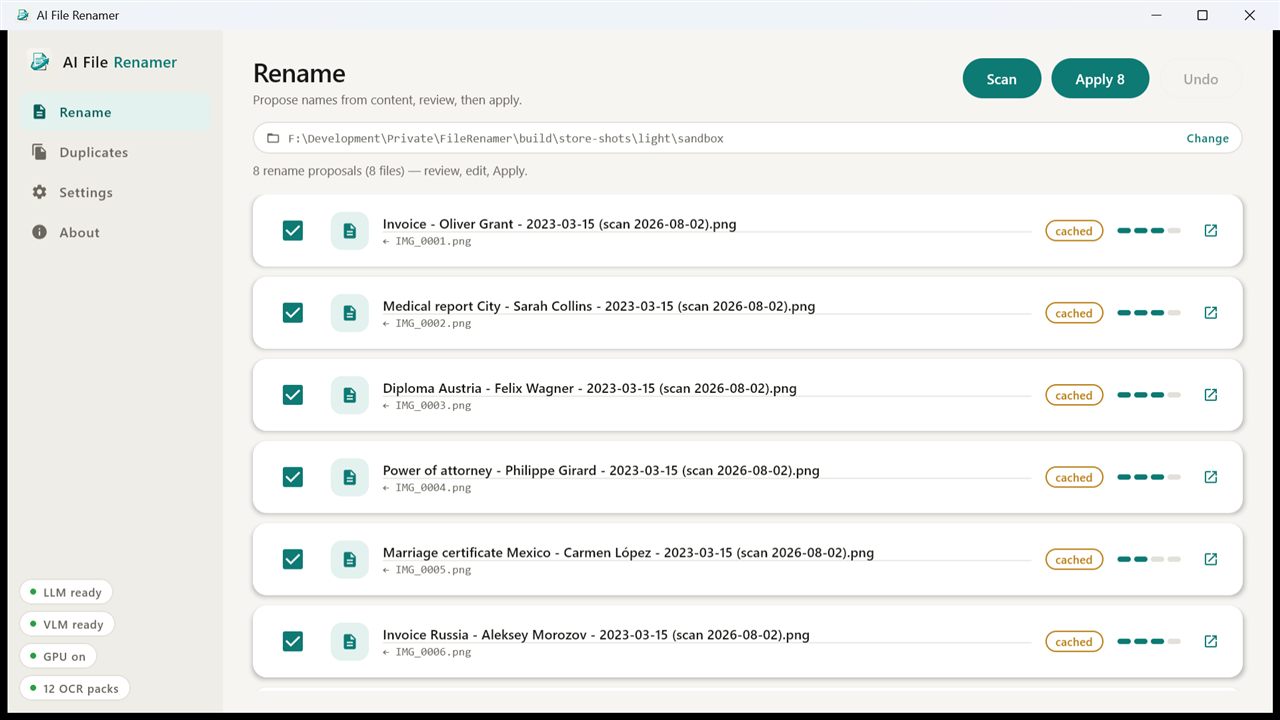
No. Files are renamed in place, and metadata is written without re-compressing an image
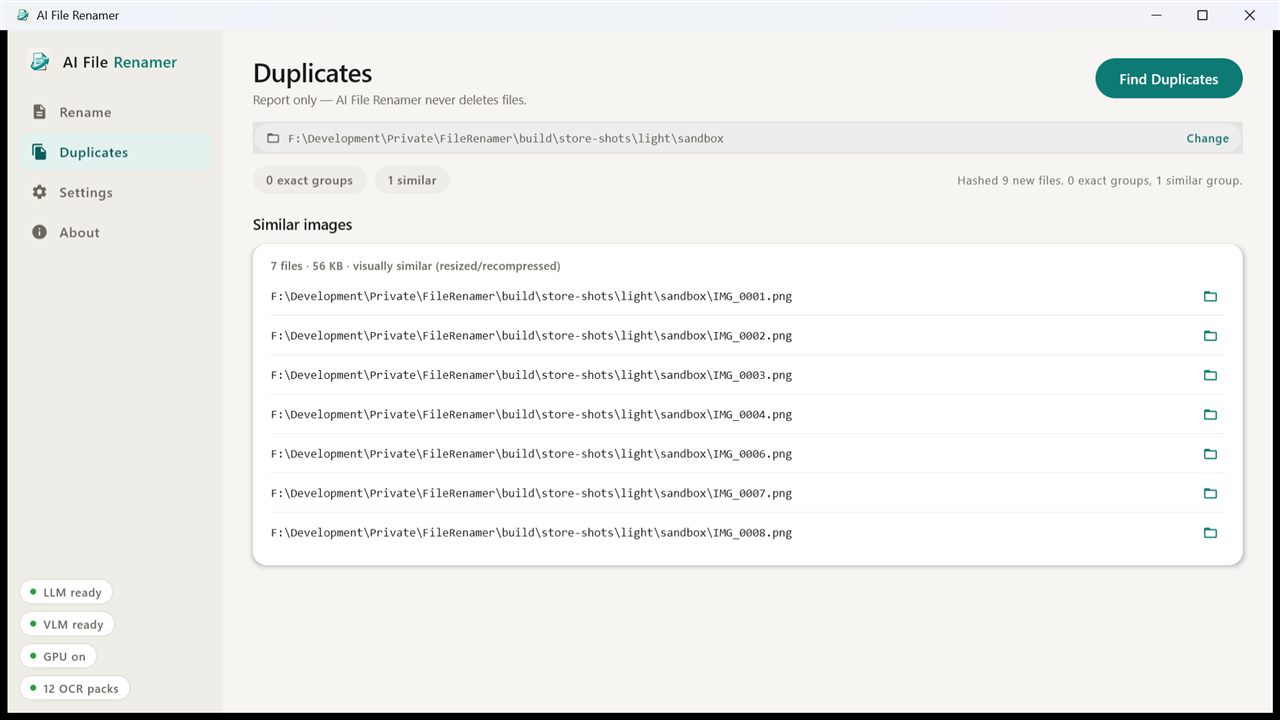
or re-rendering a PDF. Duplicate removal is opt-in per file, asks first, and moves copies to the Recycle Bin rather than deleting them.
Undo restores the original names; the metadata it embedded is additive and stays, which
is deliberate.
What does it cost?
It will be a paid app with a free trial, sold through the Microsoft
Store. The trial and the purchase are handled entirely by Windows — there is no licence
key to enter, no account to create, and the app itself never contacts us.
What do I need to run it?
Windows 10 or 11, 64-bit. The installer is per-user, so no administrator rights are
required. Budget about 250 MB for the app plus the models you install. The OCR engine
needs the Microsoft Visual C++ x64 redistributable, which is already present on most
systems.
What about macOS, Linux and mobile?
The engine is cross-platform by design and the shared core is built to be reusable on
Android and iOS later, but Windows is the only packaged, tested build today. There is no
release date for the others.
 AI File Renamer